

Article | Apr 08, 2021
The unimaginable opportunity that the pandemic has given to Peruvian coffee
No one expected it, least of all the coffee shops that feared closures and financial disasters, but the outlook was not that critical, although the blow has been felt.
Carlos Risco, industrial engineer and owner of Ynn Coffee, received the pandemic with uncertainty, but sales did not stop and that surprised him. In almost three months, the small specialty coffee shop that was born in 2018 sold almost a quintal of coffee. That amount used to be finished in six months.
It was at the time of the pandemic that Ynn Coffe left Surquillo street to move to Avenida Principal 303. The place is spacious, airy and has a base of more than 300 regular customers. His wife is a computer engineer and her name is Anabel Pérez. The pair wants to go beyond the WhatsApp application, which has been the main channel for buying ground coffee and beans. They are working on a service like Rappi that allows them to reach a larger clientele: "The pandemic has been an opportunity, to sell coffee, to find a bigger space, new baristas and increase sales in general".
Ynn Coffee sells coffee from the El Morito farm (San Ignacio), owned by producer David Flores.
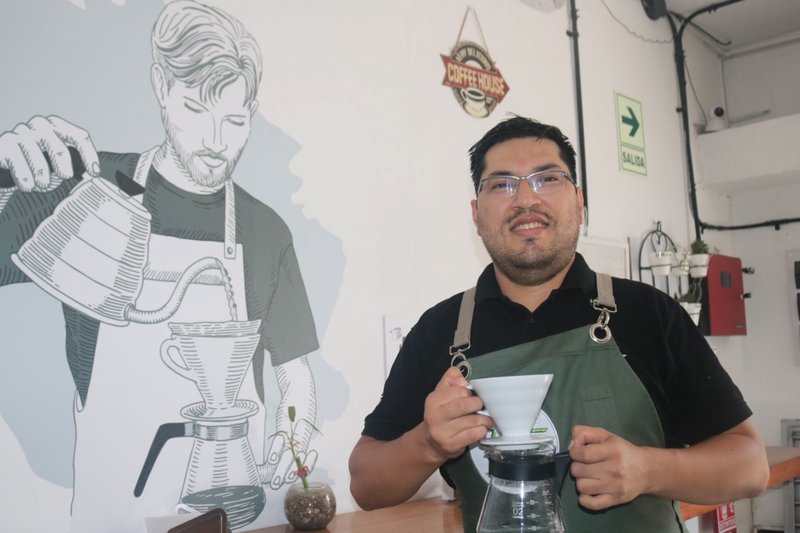
Carlos Risco, owner of Ynn Coffee (Photo: Esther Vargas)
With more experience in the coffee world, Gino Kanashiro of Origen Tostadores de Café -which has three locations in Surquillo, Pueblo Libre and Magdalena- affirms that the sales of coffee beans or ground have increased by 30%. He is referring to his business.
"Something amazing happened this year. As people are more at home they consume more ground coffee. This caught us off guard, but it has been good. I thought sales would drop in the summer and it hasn't happened. People are drinking coffee in It is incredible that people are preferring specialty coffees. I think consumption will continue to rise, and that will be a bombshell. At last, little by little, they will leave the soluble, instant or cheap for the special ", explains Gino.

Gino Kanashiro, from Origin Coffee Roasters (Photo: Fabiola Valle)
Nothing will be the same after the pandemic, but the crisis has created unthinkable opportunities for the sector. In the retail channel, coffee sales increased 6% due to capacity restrictions and consumer concerns about being exposed to COVID-19.
According to Kantar World Panel, in the period 2019-20; Consumers decreased the frequency of buying coffee, but bought 20% more grams each time, as the pandemic generated expectations of shortages and supply problems that led to an increase in the storage of products for domestic consumption.
In this regard, Harrysson Neira, owner of Neira Café Lab -with two stores in Miraflores and San Isidro- agrees that in a concrete way there is an increase in the sale of coffee bags: "People are going out less, but buying more. We did a survey on Instagram, where, for example, 60% had a mill at home". In fact, the cafeteria offers mills, French presses and other methods.
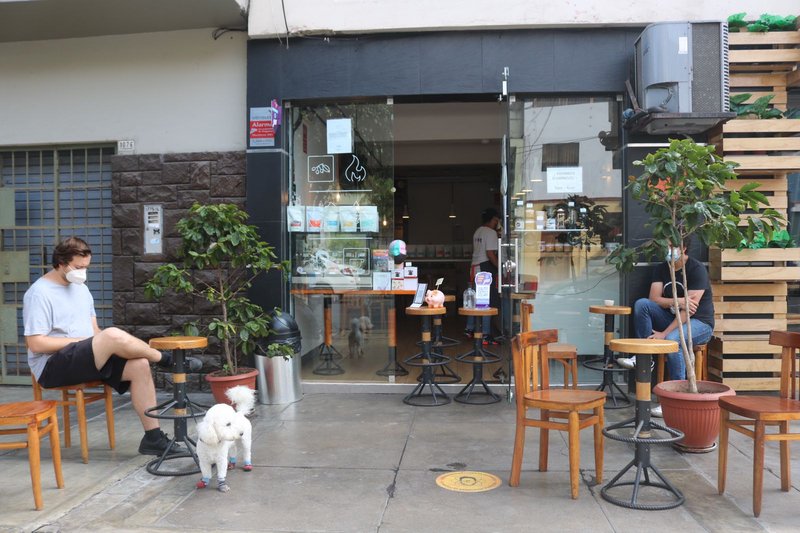
Neira Café Lab location in Miraflores (Photo: Esther Vargas)
The new work-from-home policies led a good number of Peruvians to a cup of coffee, and they found the opportunity to buy coffee bags and accessories on social media, such as Instagram or Facebook. Thus, electric and manual mills began to be sold more, and although there are no figures in this regard, stores like Hiraoka or Saga offer them for about 100 soles (the average).
The reduction in social interaction at the beginning of last year could explain the increase in the average consumption of coffee at home, which increased by 108 grams (13%) compared to 2019. Preparing coffee at home is a ritual, and this is how many began to buy coffee makers beyond the electric ones. For example, Patricia Cohaguila, from Pausa Café, in Jesús María, says that in addition to bags of coffee, she started selling French presses, one of the simplest methods to prepare this drink. In supermarkets you can also find the well-known Italian presses and mokas. Something was changing in the middle of one of the bloodiest scenarios that we have experienced globally.

Patricia Cohaguila, from Pausa Café (Photo: Renzo Salazar)
It is estimated that by 2025 each household would drink 12 more cups of fresh coffee beans or ground. The figure is not exaggerated. We are having more coffee.
According to Kantar (2020), during the pandemic, Peruvians were willing to pay a higher price for coffee in high-value formats.
The average ticket value increased from 7 to 9 soles compared to the previous year. The "new normal" also benefited more than 16 local fresh coffee brands, which together this year increased the value of their sales in the retail channel by 12 million soles.
HABITS IN THE NEW NORMALITY
Specialty cafeterias, in terms of lounges, have seen a decrease in the public, but the loyal clientele has followed and adapted to the biosafety protocols.
Patricia Cohaguila, with a cup of coffee from Chirinos (Cajamarca) in hand, affirms that she "is selling three times more coffee than before the pandemic". Small example: before the coronavirus, it sold three bags in seven days; today, there are 25 and more.
"Recontra more coffee is being consumed. The percentage on the table is maintained, it does not fall in spite of everything. But the sale of bags grows and grows", says Patricia, who previously roasted once a week, and now two. She invested in online advertising and connected much more with clients, the so-called 'pausa lovers' who did not abandon her. For this winter, in addition to Cajamarca, she plans to include another origin.
The pandemic ended up offering an unimaginable opportunity to a good group of coffee shops.
FACT:
In the following weeks we will continue to share information on internal consumption patterns in the different coffee segments. With these inputs and the contribution of the sector, work will be done on the National Plan for the Promotion of Coffee Consumption, which is part of the Alliance Project for Sustainable and Competitive Coffee, executed by the Peruvian Chamber of Coffee and Cacao and the National Board of Coffee as part of the SeCompetitive Program of the SECO Swiss Cooperation, in collaboration with Helvetas Peru and the Swiss Embassy in Peru.
________________________________________________________________________
Information sources
Consultant 1: Euromonitor Passport 2020. Peru. Analysis of the Coffee Category.
Consultant 2: Kantar World Panel 2020. Peru. Coffee Consumption at Home.
Period: Kantar's evaluation period is quarterly and Euromonitor's is annual.
Frequency: 11.42 is the average for the year 2019 and 9.72 is the average for the year 2020.
Occasion: The Purchase by Act variable indicates that the average for 2019 is 84 grams and for 2020 is 100 grams.
Expectations: Euromonitor Passport 2020. Peru. Hot Drinks Market Analysis Report.
Average coffee consumption: The Average Consumption variable indicates that the average for 2019 is 858 grams and for 2020 966 grams, the difference is 108 grams. The increase was 12,587%
Rituals: Mintel 2020 phrase. Products with rituals of preparation, presentation or consumption. Available at https://www.proecuador.gob.ec/productos-con-rituales-de-preparacion-presentacion-o-consumo/
Fresh coffee consumption: Euromonitor Passport 2020. Peru. Analysis of the Coffee Category.
Average Ticket Value: Kantar Worldpanel 2020. Peru. Coffee Consumption at Home.
Sale Value of Fresh Coffee brands: Euromonitor Passport 2020. Peru. Analysis of the Coffee Category.